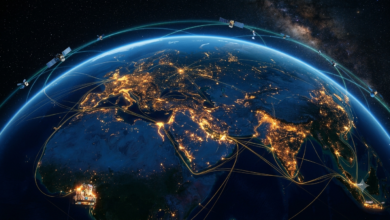


The ice is melting, and the world’s superpowers are moving in. How a climate catastrophe triggered a trillion-dollar race for resources, new shipping routes, and military supremacy at the top of the world.
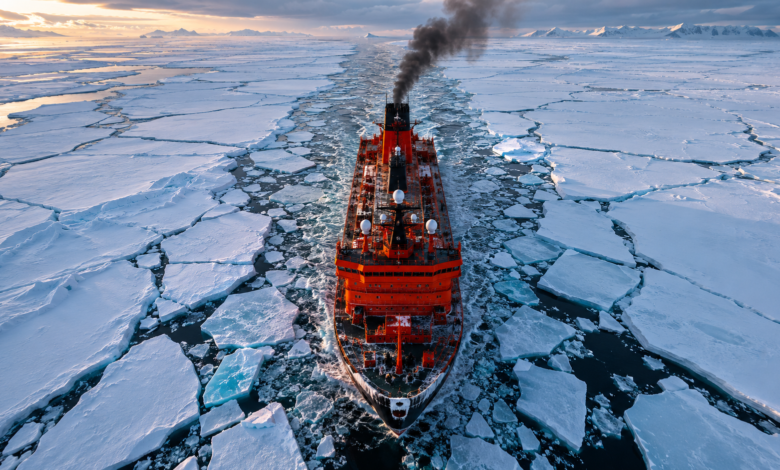
Thirty-three thousand tons of reinforced maritime steel do not simply glide through the Kara Sea; they brutalize it.
Aboard a Russian nuclear-powered icebreaker pushing toward the High North, the sensation of movement is less about sailing and more about controlled seismic violence. Powered by twin nuclear reactors generating enough thermal energy to light a medium-sized city, the vessel’s specialized spoon-shaped bow doesn’t cut the ice. It climbs onto it. The sheer weight of the ship presses down until the three-meter-thick crust of the frozen ocean screams, fractures, and finally detonates under the pressure.
Behind the ship lies a jagged, dark-blue scar of open water. It is a new artery for global trade, carved into a space that, for the entirety of human history, has been a lethal, impenetrable wasteland.
But the most consequential actions in the Arctic today make no sound at all.
Three hundred miles above this violent procession, military surveillance satellites drift in total silence, their radar pulses piercing the perpetual blizzards to map the retreating ice edge in real-time. Deep below the churning surface, in the freezing acoustic shadows of the Barents Sea, American fast-attack submarines glide with their engines cut to a whisper, hunting the metallic signatures of Russian ballistic missile subs.
For millennia, the Arctic was a geographic vault—a place where imperial explorers starved and compasses failed. Today, the vault is wide open. The Arctic is warming up to four times faster than the rest of the planet. And as the white shield melts, exposing the dark ocean below, it is uncovering a trillion-dollar paradox. The world is racing to claim the very fossil fuels that caused the ice to melt, alongside the critical minerals required to save the planet from climate collapse.
Welcome to the newest, and perhaps final, geopolitical frontier on Earth.
The Maps Are Lying to You
If you look at a standard globe, the Arctic appears as a static white mass at the top. The reality is that the map of the High North is currently being violently redrawn by international lawyers, sonar engineers, and deep-sea roboticists.
Unlike the Antarctic—a continent protected by a global treaty that bans military bases and mining—the Arctic is an ocean surrounded by heavily armed sovereign nations. Under the United Nations Convention on the Law of the Sea (UNCLOS), coastal states like Russia, the United States, Canada, and Denmark (via Greenland) possess exclusive rights to drill and mine within 200 nautical miles of their shores.
For decades, that limit was merely an abstract concept. The treasure was buried under impenetrable ice. Now, the thaw has triggered a high-tech land grab for the ocean floor itself.
“The era of ‘Arctic Exceptionalism’—the post-Cold War dream that the North Pole could remain a peaceful, scientific sanctuary—has definitively shattered.”
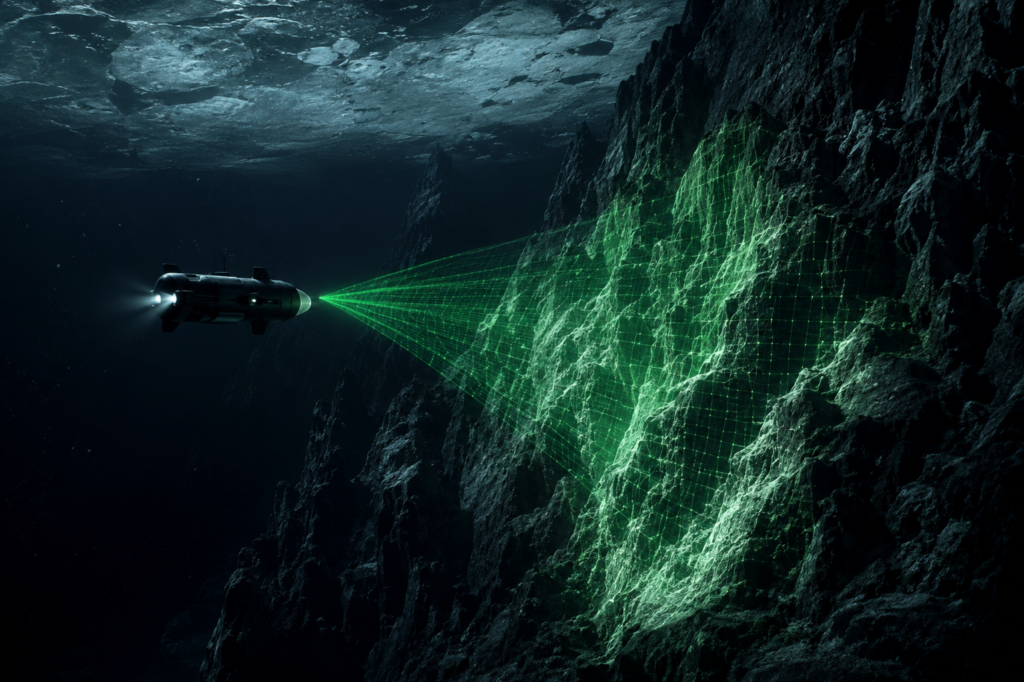
Under an obscure UN clause, a nation can claim vast stretches of the international seabed if it can scientifically prove the underwater terrain is a geological extension of its continent. The ultimate prize is the Lomonosov Ridge, a massive, submerged mountain range bisecting the Arctic Ocean. In recent years, autonomous deep-sea drones have plunged into the pitch-black depths to harvest geological core samples, resulting in Russia, Canada, and Denmark submitting overlapping, maximalist claims to the UN.
The stakes are existential. According to public assessments by the US Geological Survey, the Arctic conceals roughly 90 billion barrels of undiscovered, technically recoverable oil, and over 1,600 trillion cubic feet of natural gas. In a global economy desperate for energy security, claiming the seabed is not an exercise in cartography; it is a matter of national survival.
A Fortress in the Frost
As the permanent ice recedes, the geographic buffers that historically protected the northern flanks of the superpowers have evaporated. The result is the most intense, sophisticated military buildup the region has witnessed since the Cold War.
For Moscow, the Arctic is the beating heart of its geopolitical leverage. The Kola Peninsula, bordering the Barents Sea, is the headquarters of Russia’s Northern Fleet and the home of its sea-based nuclear deterrent. To defend this “Bastion,” Moscow has resurrected over fifty abandoned Soviet-era military outposts from the permafrost. Runways have been lengthened to launch interceptors armed with hypersonic missiles. Massive anti-aircraft radar domes now dot the coastlines, creating invisible, overlapping domes of lethal airspace over the newly opening shipping lanes.
But NATO has awakened from its northern slumber.
Following the geopolitical earthquake in Eastern Europe, Finland and Sweden abandoned decades of strict military neutrality to join the alliance. Overnight, NATO forged an unbroken wall of advanced military power stretching from the high Arctic of Norway down to the Baltic Sea.
The epicenter of this new friction is the GIUK Gap—the freezing stretch of water between Greenland, Iceland, and the United Kingdom. It is the only exit for Russian submarines attempting to reach the Atlantic. Today, the skies above it are continuously swept by NATO maritime patrol aircraft dropping sonobuoys, while the seabed is laced with classified acoustic listening arrays. Every ripple, every thermal shift in the water, is tracked and analyzed by supercomputers.
The Silk Road Goes North
To fully grasp the geoeconomic stakes of the melt, one must look 3,000 kilometers south of the Arctic Circle, to the policy rooms of Beijing.
China possesses no Arctic coastline. Yet, it audaciously published a policy declaring itself a “Near-Arctic State,” officially launching the “Polar Silk Road.” It is a strategic masterstroke designed to bypass the maritime chokepoints of the 20th century.
Global trade is enslaved to geography. If a Chinese cargo mega-ship leaves Shanghai for Europe via the Suez Canal, it faces a journey of roughly 11,200 nautical miles through pirate-infested and geopolitically volatile waters. But if the Arctic ice melts enough to fully open the Northern Sea Route along the Russian coast, that journey shrinks to just 7,300 miles.
It cuts transit times by two weeks. It saves hundreds of thousands of dollars in fuel. It mitigates the risk of a naval blockade in the Strait of Malacca. It fundamentally shifts the center of gravity of global logistics.
Yet China’s calculus extends far beyond shipping lanes. It is intensely focused on the rocks beneath the ice.
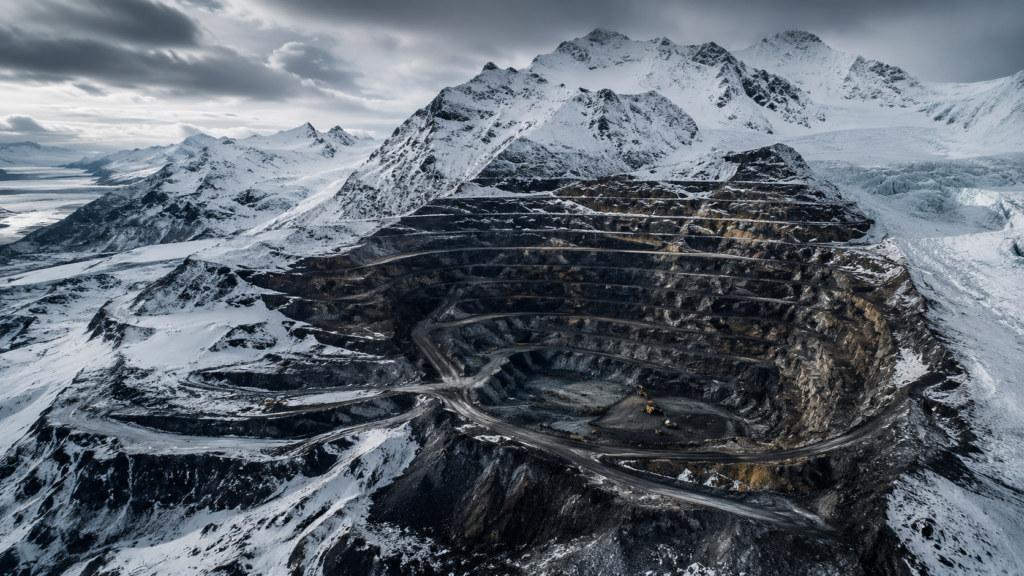
To manufacture electric vehicles, advanced AI processing hardware, and the targeting systems of modern fighter jets, the world requires Rare Earth Elements (REEs). The largest untapped reserves on Earth lie beneath the melting glaciers of Greenland. When Chinese state-backed entities aggressively attempted to buy up abandoned military bases and mining rights in Greenland, Washington panicked, exerting massive diplomatic pressure to block the deals. The battle for Greenland’s minerals proves that the Arctic is the supreme chessboard of the 21st century.
The Carbon Time Bomb
Beneath the intricate geopolitical maneuvering lies a terrifying, unrelenting physical reality. The Arctic operates on a lethal physics principle known as the Albedo feedback loop.
White sea ice reflects up to 80 percent of the sun’s solar radiation back into space. Dark ocean water absorbs about 90 percent of that heat. As global warming melts the ice, more dark ocean is exposed, which absorbs more heat, which in turn melts more ice. It is a runaway thermodynamic train.
But the true nightmare is buried in the dirt.
Across the vast expanses of Siberia, Alaska, and Northern Canada, permafrost—soil that has remained frozen since the Pleistocene epoch—is rapidly thawing. Trapped inside this freezing mud are gigatons of dead organic matter. As it thaws, microbial life awakens, digesting the matter and exhaling methane—a greenhouse gas exponentially more destructive than carbon dioxide over the short term.
“We are carving shipping lanes through dying glaciers and plotting ballistic missile trajectories over thawing permafrost.”
If the permafrost collapses completely, it will trigger a “methane bomb,” causing a spike in global temperatures so severe that no human treaty or fleet of nuclear icebreakers could contain the fallout.
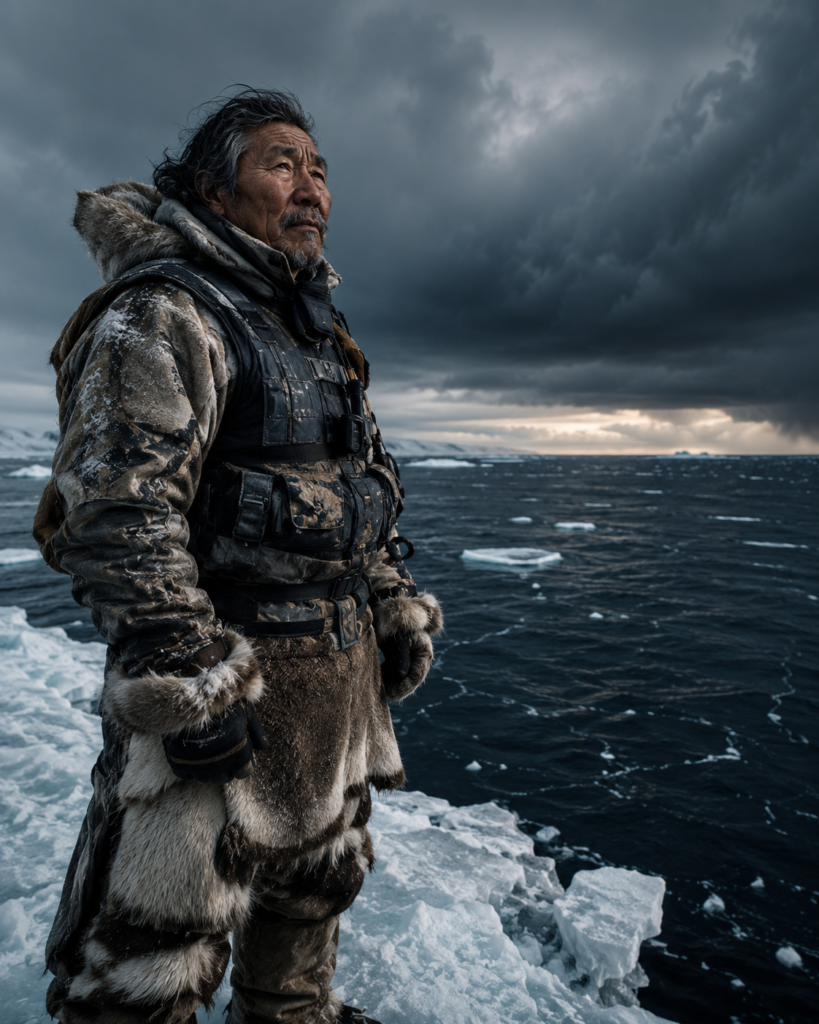
For the four million human beings living in the Arctic, including the indigenous Inuit and Sami communities, the apocalypse is not a theoretical model; it is their daily reality. Their ancestral hunting grounds are dissolving into the ocean, and their coastal villages are collapsing due to extreme erosion. Ancient knowledge of ice patterns is becoming obsolete as the environment becomes lethally unpredictable.
The Edge of Ruin
By 2050, the Arctic will likely experience its first entirely ice-free summer. What happens then?
If the fragile legal framework of UNCLOS collapses under the weight of superpower greed, an unregulated resource rush will ensue. In a hyper-militarized zone where hypersonic weapons drastically reduce the time commanders have to make decisions, a single misunderstanding—a blocked shipping lane, a severed subsea data cable, or a collision between nuclear submarines—could escalate in a matter of minutes.
The Arctic is no longer at the edge of the world; it is at the absolute center of our future. We are currently engineering a new geopolitical reality in real-time. The ultimate question is not whether the Arctic will change—that is a physical, thermodynamic certainty already locked in by centuries of atmospheric carbon.
The question is whether the global community possesses the diplomatic architecture and the moral fortitude to manage the opening of a new ocean. If we fail, the High North will not just be the victim of a warming world; it will become its first major battlefield. In the uncompromising race for the Arctic, victory and ruin may ultimately look exactly the same.